


Southwark Council wants to speed up Aylesbury Estate project amid reports of anti-social behaviour in vacant blocks
Southwark Council’s cabinet has formally agreed to change a development partnership agreement to enable Notting Hill Genesis to pull out of the later stages of a 4,200-home regeneration project.
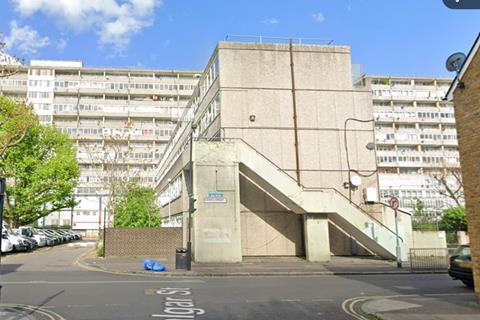
Councillors on Monday night formally approved the change, which the council said has been mutually agreed with 68,000-home NHG.
The council believes finding a new development partner will enable the project to be accelerated.
Helen Dennis, cabinet member for new homes and sustainable development at Southwark Council, said: “Vacant blocks that require demolition have driven anti-social behaviour and crime. Plans for the Aylesbury have been beset by legal delays and other challenges, and residents want us to move faster.”
Under the revised agreement, NHG will complete work on three sites as part of the project, including 640 homes awaiting final planning permission at the corner of Thurlow Street and Albany Road, 321 homes at the corner of Portland Road and Albany Road and 122 homes plus a library and health centre at plot 18 on Thurlow Street. NHG will have completed 1,664 homes in total on the estate.
But NHG will relinquish its rights to the future phases of the project that have yet to be implemented and Southwark will instead seek new development partners.
The Aylesbury Estate project, which began in the 2000s, is seeing around 2,700 homes built in the 1960s demolished and around 4,200 new units built. A total of 1,041 have been built so far.
NHG is continuing to work on an improvement plan after being downgraded to a non-compliant ‘G3’ governance grade by the Regulator of Social Housing in November. RSH found governance failings led to poor health and safety outcomes for residents. NHG last year said RSH has agreed its improvement plan and in December said it had met 50% of milestones.
Matthew Cornwall-Jones, chief homes officer at NHG, said: “For us, residents are at the heart of the Aylesbury Estate regeneration and these changes will allow NHG to continue to build high-quality, energy-efficient homes that meet and exceed modern standards, while ensuring long-term social and economic benefits for the community.”
Regen Connect

Through ongoing analysis and expert commentary, Regen Connect highlights the policies, funding streams and local priorities that matter most to the construction and development sector.
This coverage will culminate in a special report to be published at our Building the Future Live Conference in London on 7 October.
How you can get involved:
Throughout the year, our team will be gathering insight from across the sector to inform editorial features, debates and events. We welcome contributions from practitioners who want to share experience or shine a light on emerging trends.
Click here for more on the campaign
Be part of the conversation – contact us to contribute or get involved by emailing our deputy editor at dave.rogers@building.co.uk and to find the campaign on social media follow #regenconnect







No comments yet