



In the latest in our Frontline Stories series, Yogesh Mata-Badul talks about engaging with residents, his passion for tenant vulnerability training and his personal shopping side gig
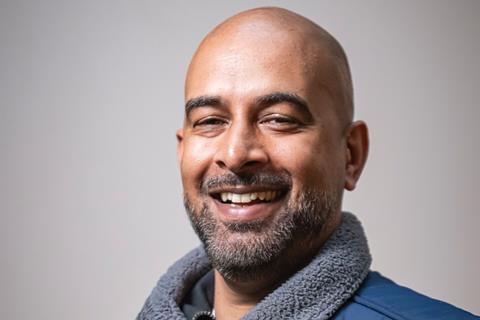
“I think it took me maybe two weeks to realise she’s not there anymore. I mean, I would pass her flat nearly every day, so it’s just a weird feeling.”
When Yogesh Mata-Badul joined repairs and maintenance contractor Durkan Regen, he wasn’t necessarily prepared to have to deal with loss in his role as a resident liaison officer (RLO). Part of his role involves building relationships with residents to win their trust so Durkan Regen can gain access to homes in order to carry out repairs.
It was through this liasion work, while working on a job to upgrade windows on a London social housing estate, that Mata-Badul formed an unexpected friendship with an elderly lady.
After over half a year of almost daily drop-ins at her home “just to check on her”, he felt he “built a relationship with her, not just work-wise but personal as well.”
Before the new year, she was diagnosed with a terminal illness and sent to live with her daughter for end-of-life care. On the day she moved from her flat, her daughter invited Mata-Badul to visit.
“When I got there, she couldn’t really speak too much. The one thing she did say to me was: “Just make sure, darling, you get my windows in,”” he chuckles.
The next morning, he received a phone call from her daughter telling him she didn’t make it through the night.
“That was quite stressful, it hit me hard,” he says sincerely.
Vulnerability, death and human connection are all facets of working on the frontline of social housing repairs and maintenance contracting work. And for Mata-Badul, the humanity of the job - the need to connect with residents - is what makes it so rewarding.
In the latest installment in Housing Today’s Frontline Stories series, he sits down to discuss his approach to building trust with residents and overcoming challenges at work and at home.
Building trust
Durkan Regen, Mata-badul’s employer, is part of repairs and maintenance contractor and housebuilder Durkan Group. It works with housing associations, local authorities and other housing providers in London and across the South East providing services such as compliance, decarbonisation, planned maintenance, building safety, damp and mould remediation, asset regeneration and heritage restoration.
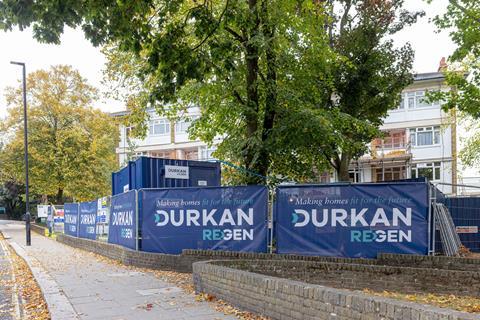
Mata-Badul describes Durkan Regen as a “great company” that invests in its people. It recently enrolled him on a site management safety training scheme course, which he passed last year.
Part of Mata-Badul’s role involves creating resident profiles - structured records that capture key information about each household such as when they are likely to be home and how they wish to be contacted - so RLOs can communicate effectively and tailor support. He says this can be challenging when trying to organise appointments with “reluctant” and “frustrated” residents who may be distrustful of housing management services, but he approaches the task with empathy.
“There’s a girl that has to take medication with her carers at 11 o’clock, so I know between 11 and maybe 3pm, it’s probably not the best time to make contact or put any stress on her.
“She might be saying things that she’s not aware of or maybe agreeing to appointments and not remembering and things like that,” he explains.
All of Mata-Badul’s contact with residents starts with a phone call but can end with genuine human connection. And he says his approach seems to be working as he notes that most of the tenants involved in a recent contract for a London council have now had their new windows installed and that they seem to be more receptive to allowing access to their homes to complete “little bits of work” like windowsills.
“When they see work happening, they’re more willing to have these appointments because it’s beneficial to them,” he says.
Navigating tenant vulnerabilities
With his job bringing him into the lives of people with vulnerabilities, Mata-Badul notes the importance of specialised training. “A lot of the council tenants I’m dealing with are quite vulnerable and elderly, some are on medication or not too well, but you won’t get this info beforehand, you actually find out when you go and visit the resident,” says Mata-Badul.
All RLOs at Durkan Regen take part in ongoing training, which includes an induction, shadowing colleagues in role and undertaking training modules which cover areas such as safeguarding, first aid, mental health awareness and working with vulnerable adults and children.
The team often works with carers, social workers and guardians where needed too, to make sure they are communicating with vulnerable residents in ways that are most appropriate for them.
However, Mata-Badul contemplates whether there is additional scope for RLOs and Durkan to discuss specific scenarios together, such as when a customer with whom he had built a good relationship passed away. This is something he is keen to put forward at Durkan’s next monthly meeting.
“Honestly, I feel a bit like a therapist with some of the residents. I think there’s a few residents that just want someone to talk to, they’re quite lonely,” he says.
Mata-Badul lost his own father a couple of years ago, his voice noticeably heavier when sharing the experience.
“I think about what he’s gone through, and obviously [in my job] seeing elderly residents – not that I didn’t have it before – but I’ve got a lot more care and understanding. So, I just treat it a little bit differently now, and when I’m dealing with the elderly, I think about my dad a lot.”
Becoming a resident liaison officer
After being made redundant from his data protection job for a gambling company, Mata-badul’s luck changed when he noticed L&Q doing remedial work on the building he was living in.
Through the L&Q employees, he found out about a job fair hosted by Durkan. At the time, he wasn’t necessarily in a hurry to secure his next position – he thought he would give himself some time to work out his next move. But three years later, he is proud to be working in social housing.
For him, “seeing the joy on people’s faces” when promised upgrades come to fruition and “getting to know different kinds of people” are what make the job worthwhile. However, social housing maintenance, despite keeping him busy, is not his only passion.
“Most Sundays, we will be driving to go to vintage sales or sample sales, just kind of networking,” says Mata-badul, chatting about the personal shopping service he and his business partner have been running for the past 10 years.
The pair used to have a stall in Spitalfields, which started out as a vintage resale business. Now, they source specific luxury articles of clothing for clients, scouring the internet, clothing rails and their contacts book for a jacket or a pair of shoes that are out of stock.
Like in his role in the housing sector, Mata-Badul is able to use his people skills for a favourable outcome. “We’ve got a small network, we’ll always trade with those guys,” he says of his moonlight role.
More Frontline Stories
‘The core skill is listening to people’: My work as a complex mental health needs lead at Advance
The ‘bloke on the desk’: My work as a receptionist at Notting Hill Genesis
‘Communication is the golden thread’: my work as an operations manager at Sovereign Network Group
‘I love helping people’: My work as a community safety officer at Abri
‘Thankfully it is taken more seriously now’ - My work as a tenancy fraud manager at L&Q
Making a difference to people’s lives: My work as a neighbourhood manager at BHA
A labour of love: My work as a housing and employment officer at Kensington and Chelsea Council
Every Person Counts
Housing Today has launched its Every Person Counts initiative to share insights around workforce issues across the whole of the housing sector.
Every Person Counts aims to provide a place where debates about skills, employment, regulatory compliance, equality diversity and inclusivity and workplace culture can play out and solutions can be shared.
Our coverage will look at what the sector needs to do to ensure it can rise to the challenge of meeting new regulations and improving standards in housing management, while also moving closer to delivering the 300,000 homes a year needed to tackle the housing crisis.
We know that housing professionals come up against these issues every day in their working lives, which is why we want to hear from you, our readers, about your experiences as employees and employers.
Email us at newsdesk@housingtoday.co.uk







No comments yet