



The much-awaited new national planning framework was published earlier this week, with a suite of pro-development policies. But builders are already warning that getting consent is only half of the story. Daniel Gayne reports.
When the first National Planning Policy Framework (NPPF) was introduced back in 2012, the idea was that it would provide the consistency and certainty needed for developers to crack on and build at scale.
With this being the eighth revision of the document in less than a decade, the government will be hoping this will be the last big planning shake-up for a good few years.
With that in mind, Housing Today combed through the 128-page document and spoke to top planning experts to find out what the new set of planning rules will mean for the sector.
National policy as strong as it can be without changing the law
To begin with, this is a markedly pro-development document, even before you get to the specific policies. The real significance of the new NPPF, says Paul Wakefield, legal planning partner at law firm Shakespeare Martineau, is the significance it grants itself.
It’s there on the very first page: The NPPF is “a material consideration of critical importance” for plan-making and decision-making. Later on, it sets out clearly that, where existing local planning policy is inconsistent with the new national rules, it will be given “very limited weight”.
“This is pretty much as far as the government could go without bringing in a new Town and Country Planning Act - without changing primary legislation,” adds Wakefield.
Under current legislation, planning permissions are determined according to the local development plan “unless material considerations indicate otherwise”.
If you’re a housebuilder or a contractor you are thinking this is great news
Paul Wakefield, Shakespeare Martineau
“As a matter of law, that’s not changed,” explains Nick Grant, barrister, Landmark Chambers, which advised the government on the NPPF. But while national planning policy has always been such a material consideration, the strength of wording in the new NPPF gives it greater significance than ever.
“Basically, it is indicating to decision makers that they should be dialing down the weight of any local plans that are inconsistent with it. That is new and that is a pretty bold swing,” says Grant.
Then there’s the policies themselves. “One of the most powerful tools in the NPPF up until this iteration was called the tilted balance,” says Grant, explaining a concept which created a presumption in favour of development in certain circumstances. The series of policies within the document from S3 to S5 replace the tilted balance in favour of something stronger.
S4 grants a default yes for development within settlements, defined as including cities, towns, villages and other predominantly built-up areas, including land which is allocated or has permission for development. Within these settlements, development should only be prevented under exceptional circumstances.
“That’s been the direction of travel for a while, especially under the Labour administration,” says Wakefield. “But it’s another step forward down that direction. If you’re a housebuilder or a contractor you are thinking this is great news.”

According to Jonathan Harper, partner for planning at Rapleys, there were “only certain circumstances” where the old tilted balance was “truly engaged”, while the new S4 policy starts with developers “on the front foot in most cases”.
S5, which concerns areas outside settlements, is similarly strong. It sets out specific categories within these areas that should also be subject to a default yes. These categories are varied but include several forms of development for rural businesses, as well as residential development within reasonable walking distance of a well-connected station - the flagship policy that the government highlighted in its publicity for the planning framework. Schemes that do not fall within those categories should “only be approved in exceptional circumstances”, creating a firmer, rules-based division between what is and is not acceptable development outside of settlements.
Elsewhere, the document sets out that for strategic sites, developers may argue, with the support of a viability assessment, that it would not be possible to comply with the Golden Rules set out by the government when it introduced the ‘grey belt’ category describing poor quality green belt land.
Paul Burrell, executive director for planning at planning consultant Pegasus Group, says that “by carving a much clearer path to development on suitable Grey Belt locations, particularly around well connected transport hubs”, the NPPF would increase opportunities to boost housing supply. Whether this will be welcome news in the areas likely to be impacted is another question entirely.
Not much changed from the draft document - but social housing sector chalks up a win
One of the most remarkable things about the revised version of the framework is how similar it is to the draft. The overall structure of the document has held up, with very few policies scrapped. There are a few brand new policies introduced since the draft stage - for instance, a requirement to give substantial weight to building climate resilience into developments - but few truly eye-catching measures.
“The industry will need some time to digest the full 128 pages, but at first glance it appears to be very similar to the earlier draft,” says Adam Ross, executive director at Nexus Planning.

Pro-development policies like the streamlined consultation requirements and the new medium-sized site category remain. But perhaps most significantly, the government did not blink on the substance of its headline policy favouring development around well-connected rail stations. This despite 52% of consultees strongly disagreeing with it.
There were, however, a couple of notable tweaks in this area. The definition of a ‘well-connected’ station was expanded from stations and stops within the top 60 travel to work areas by gross value added to those within the top 80.
Fergus Charlton, partner at law firm Michelmores, says the government would be hoping to deliver planning permissions for several hundred thousand new homes through the stations policy and says the “areas that are going to benefit are probably going to be the parkway type train stations”.
Meanwhile, greater clarity has been given concerning the distance from these locations within which the policy applies.
Four trains an hour is going to cover pretty much every commuter station around a major city
Angus Irvine, Rapleys
Nexus’ Ross says the lack of clarity over what constituted a reasonable walking distance had been a concern and so says it was “welcome” that the framework defined this. However he said the decision to set the limit at “around” 800m or a 10-minute walk “means that it will not eliminate debate, [but] it will narrow it to some extent”.
The Home Builders Federation (HBF) is understood to have concerns at the requirement that the whole site fall within these boundaries but Rapleys’ Harper says there is benefit simply in having a clear rule. “You could debate this till the cows come home about what a reasonable distance is,” he says. “I think that does help just in terms of providing clarity.”
Another tweak was the decision to soften the minimum density requirements for building around well-connected train stations. The original policy would have required building at a minimum of 50 dwellings per hectare. This has been reduced to 35dph, with a higher level of 45dph for stations with eight or more trains passing through per hour.
This has generally been well received. “Moving away from that kind of level of being overly prescriptive and allowing some site nuance to come through in that, whilst at the same time trying to encourage density around sustainable transport locations, is a positive,” says Wakefield. “So I thought that was a sensible softening of the previous position from the consultation draft.”
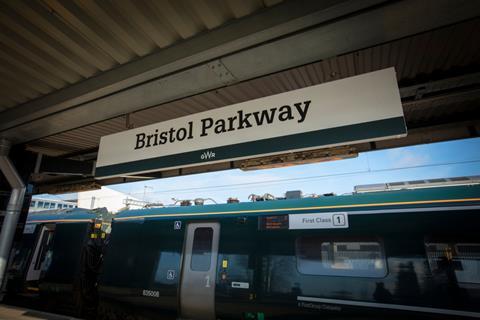
Housing Today understands there are some minor concerns within the housebuilding sector that some of the rules - for instance the requirements for four trains per hour - could limit the application of the policy. But Angus Irvine, partner and head of Rapleys Living, seems unconcerned. “Four trains an hour is going to cover pretty much every commuter station around a major city,” he says. “What it won’t cover is the two-trains-an-hour suburban line out in mid-Lincolnshire.”
One of the few policies to be dropped outright was a measure that would have removed on-site affordable housing requirements within the newly established medium-sized development site category.
The decision not to go ahead with the policy was cause for celebration within the social housing sector, with Kate Henderson, chief executive of the National Housing Federation, explaining that it would “safeguard one of the most important routes for delivering social homes in rural areas, ensuring we can build genuinely affordable homes where people need them, in every postcode across the country”.
Another dropped policy was standardised inputs for viability assessments, although these are now expected to come forward later in planning practice guidance. Rapley’s Harper describes this omission as “sensible”.
Government sticks with divisive 40% accessible requirement
Another area on which the government stuck to its guns was in its decision that at least 40% of new homes should be built to M4(2) accessible and adaptable standards. Its steadfastness on this matter will have pleased nobody.
Consultation responses on this one were split, with developers saying it was too burdensome and accessibility advocates arguing that the measure did not go far enough.
During the consultation period, Habinteg Housing Association, alongside social housing and disability sector partners, wrote to the housing secretary describing the measure as a “significant step backwards that risks building the care crisis of tomorrow” and instead called for all new-build homes to be delivered to this standard.
Martin Warhurst, chief executive at Habinteg, now says the 40% requirement “must be a minimum threshold, not a target” and that local authorities that were already moving beyond that level “should be encouraged to continue doing so”.
He urged for clear monitoring and data collection to ensure accessible homes were actually being delivered and added that local plans should “specifically assess the need for homes designed to full wheelchair user dwelling M4(3) standard as the M4(2) standard is not a substitute for fully wheelchair accessible homes for the people that need them”.
On the other hand, Housing Today understands that the housebuilding lobby remains concerned that the 40% requirement could make sites unviable if other policies are not adjusted.

Weak commitment on swift bricks does little to placate ecologists and wildlife advocates as biodiversity rules limited
While housebuilders and developers will be pleased with the slate of permissive policies, advocates for the natural environment seem less pleased by the framework.
This despite a great deal of engagement in the consultation process. Of the 16,373 campaign responses to the consultation, the largest number (5,347) were from Hampshire & Isle of Wight Wildlife Trust, followed by the RSPB (5,253).
In the end, the framework stuck with its original commitment that “development proposals should incorporate integrated nest boxes (commonly known as swift bricks) into their construction unless there are compelling technical reasons which prevent their use, or would make them ineffective”.
That might sound like supportive language, but according to the Royal Society for the Protection of Birds’ head of nature policy in England, Carl Bunnage, the measure does not go far enough. “Developers are told they should incorporate these features, not that they must,” he says. “Without clear requirements and robust enforcement, the numerous caveats effectively give developers a route to wriggle off the hook altogether.” The RSPB also want to see the policy require that bricks be installed in accordance with the relevant British Standard.
It doesn’t really seem to see planning as a tool to help deliver good multifunctional use of land and to deliver environmental improvement
Sally Hayns, CIEEM
More broadly, there has been displeasure at the overall emphasis of the document, as well as its moves to weaken biodiversity requirements (BNG).
Sally Hayns, chief executive of the Chartered Institute of Ecology and Environmental Management, a professional body for ecologists, says the NPPF “seems to emphasise shorter-term economic growth and economic development over longer-term sustainable development” and appears to be “completely disconnected” from the land use framework published last year.
“Although there’s a whole chapter on nature, it doesn’t really seem to see planning as a tool to help deliver good multifunctional use of land and to deliver environmental improvement,” she says, voicing her disappointment at the decision to “whittle away” at biodiversity net gain requirements.
The 10% national statutory requirement was previously a minimum, with councils able to set higher levels in their local plans. “They can’t do that as a policy [anymore],” says Hayns. “However, they there is the opportunity to do that on a site by site basis.”

By contrast, the decision to limit BNG requirements to the national statutory framework was welcomed by the HBF.
Hayns says she is also “disappointed” by the decision to drop footnote seven in the grey belt policy, which had previously listed areas or assets that would provide a strong reason for refusing or restricting development. In response to the consultation, in which 53% of respondents strongly disagreed with this measure, the government says it is “satisfied that separate policy protection for footnote 7 areas remain in place”.
There were spots of relief for environmentalists, however. The draft policy would have limited councils’ ability to set higher environmental standards for new homes. But after a group of more than 60 local authorities, businesses and NGOs wrote to the housing secretary earlier this year protesting the measure, the government appears to have backed down slightly. It has added a new sub-paragraph outlining the circumstances in which local standards for energy efficiency may be justified. “The government’s decision to amend the Framework in light of wide sector concerns, and allow local authorities to go above national standards on energy efficiency, is correct,” says Chris Williamson, president of the Royal Institute of British Architects.
Industry grumbles at ‘onerous’ protection of community assets but may be ‘price worth paying’ to prevent hollowed out neighbourhoods
One of the policies most loudly publicised by the government was its decision to protect pubs and other community assets from conversion.
The policy states that “development proposals should not result in the loss of key community facilities and public service infrastructure”. It requires developers to demonstrate that there is “no reasonable prospect” of the previous use being retained. In the case of shops and public houses, it requires a 12-month marketing exercise to have been undertaken to demonstrate the use is no longer commercially viable.
In fact, this was actually strengthened from the draft to the final version. Originally it applied “only where the facility would be the last of its type in the area concerned”. But this language has been stripped out.
A separate policy requires that pre-existing businesses “should not have unreasonable restrictions placed on their current or permitted operation as a result of development being approved after they were established”, meaning, for instance, that owners of homes newly built next to a live music venue cannot get it shut down on the basis of noise.

“It’s ultimately going to provide a greater degree of protection for pubs in a lot of places across the country,” says Rapleys’ Harper. “On the face of it, what seems like quite a minor change could affect quite a lot of potential development sites. I think there’s probably other ways in which that viability position could have been evidenced rather than dictating that a marketing exercise needs to be undertaken.”
Fergus Charlton at Michelmores agrees, describing it as an “example of decisions on land-use overriding commercial decisions”. He says it is a “significant block” on development and that there were “a lot of pubs” lying empty because they are commercially not viable, describing the 12-month marketing condition as “quite an onerous” requirement. “In the face of a housing crisis, planning policy should allow them to convert,” he says.
Nick Grant at Landmark, however, notes that “there’s a lot of policies in there” to support development and that the government “doesn’t want to hollow out the community infrastructure that makes communities also work”. He acknowledged that this might put development back for a year, but that the government had “got its eyes open to that” and that “to an extent a price it’s worth paying”.
Success of NPPF uncertain in the face of local opposition and crisis of viability
Will it actually work?
Wakefield notes that, after this year’s council elections, there are plenty of non-Labour councils that will be “looking to make their mark on their local authority and may challenge development decisions as a result”.
One concern could be that councils opposed to the government’s policy pursue a legal challenge. Wakefield says the emphasis the government has given to national policy-making in this NPPF is in “slight tension” with the law, which “talks about the primacy of the development plan”. Asked whether a legal challenge could be possible, he says: “That thought has occurred to me.”
The initial response from county councils and rural unitary authorities has been cool. Andrew Husband, housing and planning spokesperson for the County Councils Network, which represents such authorities, says his members are “concerned that these ‘one size fits all’ policies will have a detrimental impact on rural areas” and felt the updated framework will “weaken theirs and their local communities’ voices and shift the balance of power towards developers”.
“We remain sceptical that the revised document will not undermine this plan-led system,” he says, noting that the group would be “engaging with ministers” to express their concerns.
Even if local councils play ball, there is the issue of turning consents into actual buildings. “Government must not confuse what is consentable with what is deliverable,” says Angus Irvine, partner at strategic property consultancy Rapleys. In the tsunami of corporate responses that hit this housing journalist’s inbox after the release of an NPPF, this was a dominant theme. A few years ago, this kind of pro-development planning policy might have been met with whoops and cheers. But in today’s environment of cost pressures coming from every direction, the warm welcome is tempered by the hard, cold light of deliverability. Not surprising then, that many comments went beyond planning policy entirely and urged measures to stimulate demand or reduce regulatory costs.
Adam Bovingdon at United Trust Bank warns of the risk that “improvements in the planning environment simply result in more consented land rather than more homes being built”. His chosen antidote is modernised Help to Buy-style scheme targeted at first-time buyers and focused on SME housebuilders and developers, together with a review of Stamp Duty. But everyone has their own preference. Real Estate:UK’s Danny Pinder suggested reinstating multiple dwellings stamp duty relief, Harry Steele at BusinessLDN suggested pausing the introduction of the Building Safety Levy, while BCIS chief economist David Crosthwaite pointed to the impact of increased taxes and standards.
Of course, none of those are the kind of measures you would expect to see in a planning policy framework but the fact they are so omnipresent in the responses to the NPPF says a lot about the state of the market.
It’s too soon to say if this NPPF will work. It’s a bold swing, no doubt, but there’s plenty militating against its success.
To torture a phrase: the best laid planning frameworks often go awry.




No comments yet