


Increasing build costs amid housing emergency is ‘unacceptable’, says SFHA
The proposals for a new green energy standard being considered by the Scottish government have been criticised by housing bodies.
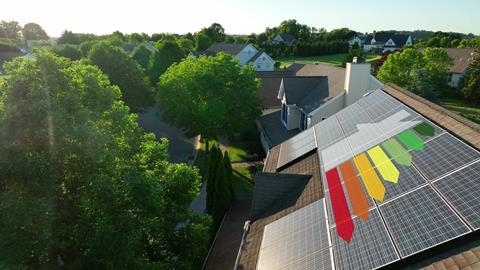
The Scottish Federation of Housing Associations (SFHA), Homes for Scotland (HFS) and the Glasgow West of Scotland Forum of Housing Associations (GWSF) have warned that an equivalent to what is known as the Passivhaus Energy Standard would add significant costs to new homes in pursuit of a “negligible” reduction in carbon emissions.
They have also said the government’s own impact assessment has given “insufficient” consideration to the wider impact of these increased costs despite housebuilding falling to the lowest level in several years.
According to the bodies, which represent the vast majority of Scotland’s housing associations and homebuilders, proceeding with the new energy standard would see even fewer homes built and lead to sharp price increases for those buying or renting new homes.
They have called on the government to maintain existing performance standards.
Richard Meade, chief executive of SFHA, said: “Proposals for a new energy standard risk deepening Scotland’s housing emergency at the worst possible time, all for a negligible reduction in carbon emissions.
“Housing associations and their partners have already made significant progress in reducing carbon emissions: homes built today emit 80% less carbon than in 1990.
“Scotland must build 15,693 social and affordable homes each year of this parliament to meet current housing need. The Government is nowhere near this target, and we know part of the reason for this is the cost of building new homes. Adding additional expense to the cost in a time of a housing emergency is unacceptable and will simply lead to more people waiting longer for the homes they need.”
The second stage of the consultation process closed earlier this month, with the new standard due to come into force for new homes and non-domestic buildings in Autumn 2029.
The updates to the Scottish Building Regulations for energy and environmental standards have been under review since 2023. They have been designed to support the government in meeting its statutory 2045 net zero targets, 2040 fuel poverty targets and 2030 child poverty targets.
A Scottish government spokesperson said: “The Scottish government is firmly committed to meeting its statutory net zero targets, while ensuring a fair transition that delivers real benefits for people and communities.
“Energy efficient and well-designed buildings reduce emissions, lower energy bills and support healthier homes, including for families on low incomes, backing our mission to tackle child poverty.
“We thank industry partners for engaging in the review to deliver a Scottish equivalent to the Passivhaus to date and in responding to the recently closed stage 2 consultation. We recognise that any new regulatory requirements must be practical and achievable and will consider comments received when updating the necessary impact assessments prior to implementation. We’ll continue working with the housing industry and local authorities on this.
“We also remain committed to delivering 110,000 affordable homes by 2032, with at least 70% for social rent, backed by £926 million this year.”






No comments yet