



Housing minister also says government has no plans to review ‘new burdens’ on councils
Matthew Pennycook has confirmed councils will not be able to use a £2.5bn low cost loan scheme announced in the summer spending review to boost social housing delivery.
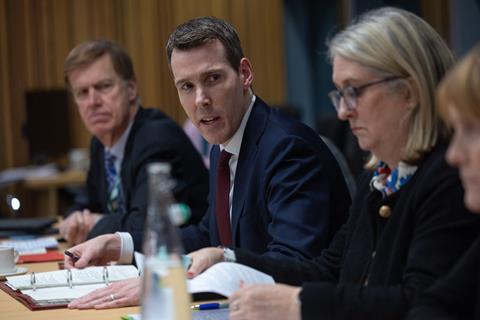
The housing minister, in a letter earlier this month, said: “Having carefully considered the fiscal implications, we have decided that the scheme will be for private registered providers only.
“We know that the decision to omit councils is a disappointment.
”We will continue to explore future opportunities to improve borrowing conditions for councils to support investment in social and affordable housing and we will confirm our approach to the Housing Revenue Account borrowing rate from the Public Works Loan Board in January, ahead of the Social and Affordable Homes Programme opening for bids.”
Pennycook was responding to a letter from new membership body Association of Directors of Housing (AdOH) urging him to make the fund available to councils. AdOH represents senior housing and homelessness leaders in local authorities.
The £2.5bn low-cost loan fund was announced in last June’s spending review to “support the delivery of new social and affordable housing”. The detail of the loans is still being worked through but it is expected they will be used as part of an ‘amortised grant’ model first proposed by Housing Today and the G15 aimed at easing a short-term balance sheet squeeze that is currently restricting development.
The request for councils to access the fund was one of several from AdOH to the housing minister in its letter.
The group also asked the government to update its ‘new burdens’ doctrine so that new costs placed on local authority Housing Revenue Accounts – including proposals for the revised Decent Homes Standard and Minimum Energy Efficiency Standards - are ‘fully assessed and funded”.
Pennycook said however the government has no plans to do this. He said: “the principle of self-financing remains the right one” and pointed to the new 10-year inflation linked rent settlement announced in the summer.
AdOH also said the government should “sustainably fund the commissioning of supported housing to prevent homelessness, ease hospital discharge, and reduce care placements.” Pennycook said councils are best placed to commission local housing-related support services and to decide how their funding is spent.
AdOH also asked for government to uprate the Local Housing Allowance reimbursement rates for temporary accommodation from 90% of 2011 rates to 90% of prevailing rates.
Pennycook said: “On LHA and TA subsidy, the government currently spends around £34 billion annually on housing support for renters including £12 billion in the private rented sector.
”April 2024’s LHA rates were increased to the 30th percentile of local market rents, costing an additional £1.2 billion in 2024/25 and £7 billion over 5 years. As with all policy decisions, we must balance support we provide with value for money to the taxpayer.”
He added the Department for Work and Pensions will keep housing benefit subsidy levels for temporary accommodation under review.
On funding for local government, Pennycook added: “The government has delivered a settlement that begins to fix the foundations of local government by providing significant investment. The settlement for 2025-26 makes available over £69 billion for local government, which is a 6.8% cash terms increase in councils’ Core Spending Power on 2024-25”.
The ‘amortised’ grant or ‘repayable subsidy’ model, proposed in Housing Today and the G15’s ’State of the Capital’ report, would see higher grant payments made upfront to housing associations which are then repaid at a later stage.
It would reduce the amount of upfront borrowing the housing association needs to take on to fund development. The idea is this would help keep interest payments lower, meaning housing associations can widen their interest cover ratio, which measures debt to income and is restricted in lending covenants.






No comments yet