


Lewisham’s new mayor says decision shows ‘current approach to housing development is not working’
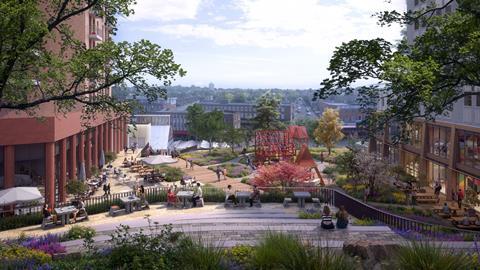
Landsec has announced it will “de-prioritise” its plans for a huge mixed-use redevelopment of a shopping centre in south London, citing rising costs and a lack of support from the local council.
The developer’s proposals for Lewisham Shopping Centre, which included 2,800 residential units, were approved by the borough last October, when it was led by a Labour administration.
In May’s local elections, the Green Party’s Liam Shrivastava became the borough’s new directly elected mayor, with the party sweeping to a majority on the council.
Shrivastava came into power calling for more affordable housing in Lewisham and had joined a protest against the shopping centre scheme during his time in opposition. Last month, he requested that a petition against the development be heard by full council despite not meeting the requirements of the council’s petition system.
Now, Landsec has announced that it has “taken the difficult decision to de-prioritise the redevelopment of Lewisham Shopping Centre to focus on other residential projects”.
It attributed the decision in part to “exceptionally challenging economic conditions”, citing “higher interest rates, increased construction costs and more complex regulations”.
However it also claimed that the council had made clear it would not “support the next phase of land assembly needed to unlock delivery without a significant increase in affordable housing”.
It is understood this relates to the acquisition of Lewisham House, the former Citibank Tower, which neighbours the site.
“This would require material changes to the masterplan which would prolong the programme,” said Landsec’s statement.
The consented scheme would have consisted of up to 1,744 conventional homes, 630 student beds, and 445 co-living units, as well as a new shopping centre, live music venue, community cafe and workspaces.
Affordable provision stood at 16% of floor space and 20% of conventional homes, with a 70:30 split between key worker and social rent homes.
This was below the council’s 50% policy target, but the Labour-led council that approved it said it had verified this as the maximum amount for the scheme to remain viable and said it had review mechanisms in place to increase delivery under changed economic conditions.
In a statement, the mayor said his administration was “laser focused” on delivering genuinely affordable housing and noted that he had “consistently said the level of social rent homes in this scheme needed to increase”.
“The fact is the conditions for such projects are simply not favourable right now,” he said, noting that one of the country’s biggest developers recently announced it would stop building in London.
This should serve as a stark reminder to the Government that the current approach to housing delivery is not working and that urgent reform is needed to unlock development and deliver the homes communities need,” said Shrivastava, adding that “the way out of this crisis is through delivering social housing”.
He said that Landsec remained “a valued local partner” and said the borough would continue to work with it in lobbying for the Bakerloo Line extension among other things.
The borough’s planning lead, Daniel Dream, said Landsec’s decision was “disappointing” and that it “reinforces the need to rethink how we deliver the homes and places our communities need”.
“We are exploring new ways of working with developers and investors so that schemes can work for both sides, from sharing risk to giving earlier certainty on planning,” he said.
“We want to work alongside developers from the earliest stages of the planning process, with clear expectations and a consistent approach so everyone knows where they stand.”
Landsec said it would continue to own, operate and invest in the existing shopping centre.



No comments yet