



CIH backs Lord Best’s proposal to give more power to courts to order entry
The Chartered Institute of Housing (CIH) has called on the government to back an amendment which would make it easier for social landlords to enter tenants’ homes for essential safety inspections and works following repeated refusals.
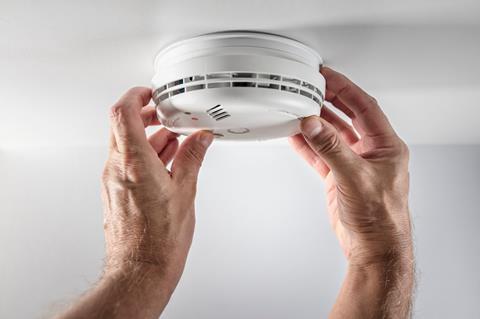
Tabled by Lord Best, the proposed amendment to the Social Housing Bill would create a statutory process for access in cases where providers have exhausted reasonable efforts to arrange inspections, including for gas, electrical and fire safety measures such as smoke and carbon monoxide alarm testing.
The amendment would give the power to a court “to make an order as it considers appropriate for the purpose of enabling the registered provider of social housing to comply with the relevant statutory safety duty.”
This would include authorising entry to the relevant premises, authorising the use of reasonable force to gain entry if necessary and authorising the carrying out of specified inspections, testing or works.
Currently, when landlords have exhausted reasonable attempts to gain access, they can seek injunction through county courts. However, the CIH has said that recent county court decisions have created “significant uncertainty” about whether courts can authorise forced access where tenants fail to comply with access orders.
A county court judge ruled last year that Southern Housiing could not force entry to conduct safety tests even after a tenant failed to comply with an injunction.
The proposal addresses concerns in the sector that repeated failures to gain access can leave tenants and neighbouring residents at risk of harm and place landlords in breach of their legal and regulatory obligations since these were enhanced post-Grenfell.
In 2025, CIH, together with the National Federation of Almos (NFA), the Local Government Association , the Association of Retained Council Housing and the Councils with ALMOs Group, commissioned the Housing Quality Network to undertake the first comprehensive analysis of “no access” within the social rented sector. The report found that that 60% of respondents considered no access to be a growing concern.
A recent white paper by the Association of Safety and Compliance Professionals (ASCP) found that there may currently be more than 200,000 social homes with at-risk or immediately dangerous gas installations and more than 90,000 properties where a category C1 electrical danger may be present.





No comments yet