



Our pick of the best Housing Today features from the past 12 months

Throughout the year Housing Today published insightful features, from exclusive data and research to analysis of the biggest issues facing the housing sector.
Here are some of the best from the past 12 months.
10. What a Farage government would mean for housing, investment and ‘net-stupid-zero’
Published in September

I am waiting for a panel discussion called “Drill Baby Drill: Abandoning Net Zero and Restoring Energy Abundance” to start when an email pops up from Reform HQ. “10 MINUTE WARNING,” says the subject line, before explaining that the leader’s address has been brought forward by three hours in a last-minute schedule change and is now not taking place at 4pm, as listed in the brochure, but at 1pm.
Cue a mad dash to the main auditorium, past crowds of attendees walking in the opposite direction who are apparently unaware – as are staff – that the conference’s main event is about to take place.
And so it is, 10 minutes later, the lights suddenly dim in the vast arena of Birmingham’s National Exhibition Centre. Trumpets blare out of speakers as the surprised crowd rises to its feet.
9. Is the government’s Building Safety Regulator shake-up enough to fix the delays?
Published in July

UKREiiF this year was busier than ever. More than 16,000 professionals from across the construction sector filled a small section of Leeds over three sunny days in May to network, booze and discuss the latest goings-on in construction.
Most of the many dozens of events held during the conference were predictably policy-focused and well-behaved. But there was one particular panel discussion which stood out.
It was obvious, just walking up to the Places for Life tent on the Wednesday morning, that something significant was happening. A crowd of attendees stood outside, craning their necks to get a view of the stage.
8. Learning from the land of opportunity: Could a US-style system of low income tax credits boost affordable housing in the UK?
Published in June

What do you do if you have an ambitious pledge to build 1.5 million homes and constrained public finances?
Keir Starmer’s Labour party put the figure at the heart of its general election campaign and has moved with speed on measures to reform the planning system in a bid to get Britain building. Starmer’s hope is that removing planning red tape and delegating fewer schemes to local planning committees will help to speed up the supply of housing.
But, as the National Housing Federation points out, the target will not be met unless the government also significantly boosts affordable housing, which traditionally has been heavily reliant on grants. The trade body estimates that 90,000 social rented homes are needed each year to meet current levels of housing need.
The government’s dilemma is how to boost affordable housing, at a time when many housing associations are also constrained financially, without making the up-front fiscal position of the public balance sheet worse. The answer, according to an influential group of activists, could in part lie on the other side of the Atlantic Ocean.
7. Revealed: Top 30 Housing Champions 2025
Published in October

Social landlords are increasingly stepping in to help residents across a wide range of areas. Whether it is helping residents manage their finances, keeping customers safe, helping people with particular needs or providing skills and training, social housing professionals drive a huge amount of social value.
Indeed, every day at Housing Today we come across dedicated and dynamic housing professionals who are making a difference.
Our Top 30 Housing Champions list highlights and celebrates just some of the many individuals who are doing exceptional work in the sector.
6. Will the expected London housebuilding package rescue the stalled development industry?
Published in October

Pretty much every dial on the dashboard is flashing red in London’s residential development sector. It is well known that completions of new homes have been dropping for the past three years – Greater London Authority data shows numbers sliding from a high of nearly 40,000 in 2021/22 to just over 33,000 in 2024/25, against a government target that 88,000 homes should be built in the capital every year.
But it is the data on starts that is particularly alarming. Greater London Authority (GLA) figures suggest that work on just 3,447 homes began in the first half of the current financial year. This compares to 27,210 starts for the full year in 2024/25 – itself already a 15-year low.
Government data, based on information from warranty providers, supports these startingly low numbers, suggesting that just 4,010 starts were made in the year to June 2025. While the government admits this dataset does not pick up every single start, it is used to identify trends.
5. Is the social housing sector ready for Awaab’s Law?
Published in October

Phase one of Awaab’s Law has come into effect, almost five years after two-year-old Awaab Ishak died from prolonged damp and mould exposure in a social home in Rochdale.
Landlords have to address all emergency hazards – including damp and mould – which present a significant risk of harm to tenants, within a fixed timeframe.
Implementing the new legislation will require all corners of the housing sector to pull together. Housing Today speaks to figures across the sector, along with nine providers, to see if it is up to the challenge.
4. Are housing associations really overcharging residents?
Published in March

Service charges are back in the headlines again.
Newspapers as diverse as the Guardian and the Daily Mail have carried stories in recent weeks detailing alleged “abuse” of the charges.
It’s a persistent accusation that sparks anger among tenant activists and frustration among the leadership of housing associations. But what is the truth of the matter?
3. How the viability crunch is also putting housing design quality under strain
Published in December
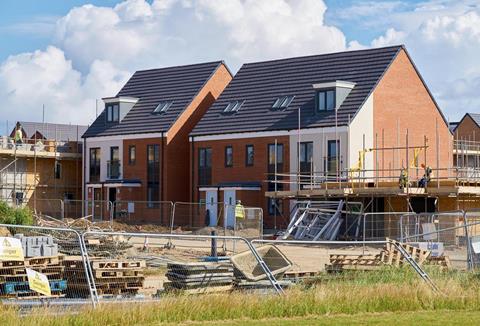
Britain’s housing ambitions are colliding with a stark economic reality: across much of the country, it is becoming harder and harder to make building new homes financially stack up.
The government’s target of 1.5 million new dwellings over the course of this parliament was meant to address decades of undersupply, yet developers are warning that the numbers simply do not add up. Schemes that once looked viable are being paused or abandoned altogether, not for lack of demand, but because the costs of land, construction, finance and regulation increasingly outweigh the value of what can be sold.
In the housebuilding sector, “viability” describes whether a project can generate sufficient return once all those costs are factored in. When the total cost of delivery exceeds the likely market value, the scheme is deemed unviable, and, as growing numbers of developers attest, that is now the rule rather than the exception.
2. Largest 50 Housing Associations and Top 50 Housebuilders
Published in November and December

This year Housing Today tracked the annual financial statements throughout housing association “reporting season”, which ran until the end of September (providers have six months in which to publish their accounts after year end and the vast majority choose to operate on the April to March financial year).
For the first time and within less than two months since all the data was made public, we compiled a sortable table of the largest housing associations in the UK..
We’ve analysed providers’ turnover, surplus, operating surplus, homes completed and homes owned and/or managed for the 2024/25 financial year. We have also pulled out key trends and themes that have emerged from our tracking of accounts over the past few months, looking at issues such as costs, repairs expenditure and interest cover.
We also once again published our annual Top 50 Housebuilders list, which ranks housebuilders by turnover. Our sortable tables also contain data relating to pre-tax and operating profit, margins, sales and house prices.
1. Housing Today and G15 State of the Capital report
Published in March

In London, housing associations currently provide 289,000 social rented homes. Research carried out for the G15 group of London housing associations as part of its Room to Grow campaign has found these homes each contribute an average of £23,777 or more in value annually, totalling over £6.86bn every year.
Providing new social tenancies for the 323,800 households on London’s waiting lists would inject at least an additional £7.7bn a year into London and the UK’s economy.
However, while social housing providers and ministers are both aware of the need for more affordable housing, both housing associations and the government have balance sheets constraints.
This inaugural State of the Capital report, produced by Housing Today in partnership with G15, looks at several ideas that could be adopted to help the sector build much-needed affordable housing in London during these difficult times.




No comments yet