


Housebuilder says Iran war creating ‘upward pressure’ on materials pricing but expects profit to bounce back in second half
Vistry has said its first half profit for the six months to June 30 will be “significantly lower” than for the same period last year due to the impact of discounting market homes to drive sales.
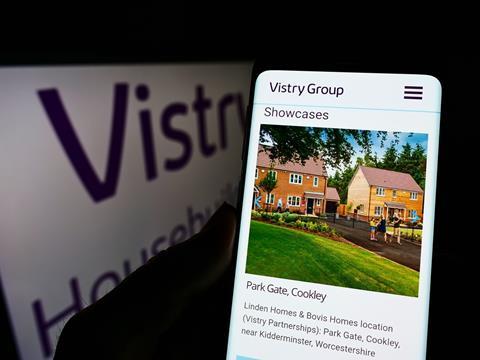
The housebuilding giant, in an unaudited trading update today, said its sales rates in the year to date has increased by 32% to 1.2 sales per site per week. The group is seeking to boost cash generation by cutting prices to reduce its inventory of finished or nearly finished open market homes.
It said: “The use of increased incentives and discounts has been more significant on low margin sites and developments that are nearing completion, resulting in an earlier recognition of profit impacts and a higher weighting of the overall profit impact in the first half than previously anticipated.”
It said it expects the impact of discounting on profit to reduce in the second half of the year, and this, coupled an expected pick up in affordable housing demand, will mean its full-year profit will be in line with last year’s. It has given a guidance for adjusted pre-tax profit of between £168m and £283m.
Vistry said its discounting of prices to reduce its number of unsold open market homes is part of a wider strategy to boost cash generation. It also said is delaying or slowing the building of some sites to “ensure full alignment between the rate of build of private homes and infrastructure with the open market sales rates on those sites”. It is adopting higher hurdles for land buying “while conditions remain volatile” and pausing its share buyback programme. Vistry is now expecting a net cash position in excess of £100m at 31 December 2026.
The housebuilder also said the Iran conflict has started to create upward pressure on material and, to a lesser extent, labour prices.
It said: “We are mitigating these where possible, through proactive engagement with our sub-contractors and suppliers and we will continue to monitor overall build cost inflation for 2026 and into 2027 as macro-economic conditions evolve.”
It said affordable housing transactions have been “subdued” in the first half of the year as the social housing sector is between government funding programmes, with grant not yet allocated under the £39bn Social and Affordable Homes Programme announced in last summer’s spending review. Bidding is currently underway with funding allocations for housing providers expected to be confirmed later in the year.
“This [the SAHP] is expected to drive a step up in demand from our affordable housing partners towards the end of 2026 and into 2027, which will contribute to a greater second half weighting of partner revenues”, it said.



No comments yet