



Analysis by benchmarking firm reveals social landlords largely meeting new requirements that came into effect in October but there are issues around interpretation and capacity
Social landlords are showing a high level of inconsistency in the way they identify and prioritise emergency hazards under the new Awaab’s Law that came into effect in October, according to analysis by Housemark.
The benchmarking firm, drawing on figures from its ‘pulse’ surveys of around 150 landlords in November and December, said compliance with the new statutory timescales is “generally strong once hazards are categorised”, with seven in 10 landlords achieving more than 90% compliance for recorded emergency hazards.
However, it said: “The data highlights wide variation in how hazards are identified and prioritised, suggesting that interpretation and triage remain the most significant challenges rather than intent or willingness to comply.”
The data shows a spread in the number of emergency hazards recorded across the sector. In December, 59% of landlords reported fewer than 20 emergency hazards per 1,000 properties, but 16% reported more than 100 (see graph below).
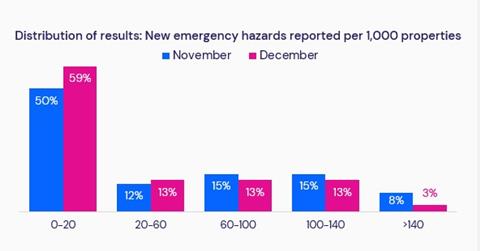
Source: Housemark pulse survey for January. The x-axis above shows number of landlords
It said: “Such wide variation suggests differing interpretations of what qualifies as an emergency hazard.”
Under phase one of Awaab’s law, social landlords must investigate and make safe emergency hazards, such as dangerous electrics and severe leaks, within 24 hours of notification. They also have to investigate significant damp and mould hazards within 10 working days of being reported.
The Housing Ombudsman last year warned landlords’ inconsistent approach to identifying emergency repairs could undermine the fair treatment of tenants.
Housemark also pointed to capacity constraints affecting compliance. Its survey showed 71% of emergency hazards were resolved within 24 hours in November but this dropped to 56% in December which it said reflected seasonal workforce pressures rather than reduced compliance effort”.
Void rates in the sector rose by 14% in December compared to November, which Housemark said reflected seasional patterns. However it said it had received qualitative data from landlords showing a “rise in void properties being held for decant in response to Awaab’s Law, where tenants must be provided with alternative accommodation if the hazard cannot be made safe in the statutory timescale.”
Awaab’s law will expand in October to cover additional health and safety hazards beyond damp and mould and then the following year it will cover all hazards in the Housing Health and Safety Rating system except for overcrowding.
Jonathan Cox, chief data officer at Housemark, said: “Awaab’s Law is driving real change in how safety is prioritised and managed. What the early data shows is that landlords are largely doing the right thing once hazards are identified, but the biggest challenge lies in interpretation, capacity and consistency.
“As the sector moves beyond the first phase of implementation, robust data and professional judgement will be critical to sustaining compliance and protecting residents.”







No comments yet