



The national press seized upon this week’s SAHP as evidence of a u-turn by the new PM. But while Burnham only has himself to blame for the bad headlines, the policy detail suggests big changes really could be on the way.

In the end, it was an anti-climax.
Andy Burnham had got a lot of people in the social housing sector nervous with his campaign trail musings on shifting the entirety of the government’s flagship £39bn Social and Affordable Homes Programme to council housing.
This anxiety was heightened when allocations were not announced, as widely expected, at the end of July - so much so that housing leaders wrote to the prime minister warning of the risk of ‘lost momentum’.
But when allocations eventually arrived earlier this week, it seemed there was no cause for fear. Housing associations were the beneficiaries of the vast, vast majority of the £10bn allocated in the first funding wave, while the proportion of social rent set to be delivered was set at 60% - exactly what had been promised under former prime minister Keir Starmer.
Many seemed pleased by this. Housing associations (or at least those that won grants) were happy they could crack on and build, developer bodies like Real Estate:UK were pleased that more “viable” tenures had not been dropped and national newspapers seemed glad to have the chance to slam the big red button marked “U-turn”.
For many in Burnham’s base on the left of the Labour Party, one imagines there was slight disappointment. The promise of a “council housebuilding revolution”, it might seem, was a cynical lie. Burnham is no different from his predecessor in No 10.
The prime minister only has himself to blame for this impression. On the campaign trail, Burnham clearly said that the £39bn programme should be “dedicated to council homes”, emphasising that he was “saying council homes because control matters”.
Council housing is an inconspicuously vague term. It is never quite clear whether it refers only to the owner of the property or also its exact tenure. Does a shared ownership home developed and part-sold by the local council count? What about a home owned by a housing association but let at social rent via the council’s waiting list?

Colloquially, it is generally accepted to mean homes owned by the council and let at social rent - usually the most affordable tenure - and this is how the media (including this publication) interpreted his remarks at the time, duly reporting that Burnham was minded to retool the SAHP to this end.
These reports benefitted Burnham at a time when he was looking for votes from working class Labour supporters in Makerfield - and here never corrected or clarified them. Now the other shoe has dropped.
As a veteran politician with experience in Whitehall and in municipal government, Burnham surely knew that it was farfetched to effect this change for the entire SAHP, given that the first wave of funding was midway through its allocation process.
It’s not clear whether Burnham could have increased the amount of social rent in the mix without re-running the entire bidding process. If he could have, one suspects it still would have caused delays and that the allocations would not have been announced this week. If he could not, the disruption would have been huge, likely resulting in a significant slowdown in affordable delivery at a time when the private market is not exactly pumping out homes at record speed.
“I recognise that councils are starting from different positions, but I expect every council to scale up now”
Angela Rayner
Such slowdowns are not just a problem because they mean fewer houses get built. They also mean fewer opportunities to bring through new skilled workers and increase incentives for existing workers to find other jobs. Leaking skilled workers from an essential industry, unwise at the best of times, is unwise public policy.
Allowing this to happen at the same time as pivoting towards delivery through already overstretched councils, many of which have zero recent experience of building homes, would have been disastrous. Councils have built only 1.3% of new homes over the past five years and nearly half of them built nothing in 2024/25.
One interpretation of all this is that Burnham is succumbing to the same brute forces of reality and pragmatism that made Starmer’s political project such a drab one. So much for that council housebuilding “revolution”.
But let’s not put away the red flags just yet.
If implicit in Tuesday’s allocations was an acknowledgement that councils aren’t ready to deliver at scale, the letter from the housing secretary to council leaders made it clear that they are, without exception, expected to get ready.

“Every council must consider how they can stretch every pound and every site to build council homes,” Rayner said, telling local leaders to review how land, buildings and revenue sources might be directed towards housing. “I recognise that councils are starting from different positions, but I expect every council to scale up now.”
Meanwhile, a policy paper published alongside the allocations stresses that “direct council delivery of Social Rent homes has a range of benefits, including democratic accountability, the ability to tailor provision to meet local housing need, and the creation of public assets that generate rental income which is reinvested in local housing to sustain and support communities”.
This doesn’t appear to be empty rhetoric. On Tuesday, the government committed £46m over three years to its newly rebranded ‘Capacity to Build’ programme.
This programme includes three elements. The first is the council housebuilding support service, which provides advice to councils that are looking to start building new homes or to increase existing capacity. It aims to provide up to 225 tailored support packages between April 2026 and March 2029.
The second is the council housebuilding support fund, which will pre-fund feasibility and viability studies, site investigations, due diligence and pipeline developments for the “express purpose of helping councils to bring forward large and ambitious bids to SAHP”.
Finally, the government is expanding its pathways to planning graduate scheme, which is already attempting to recruit greater planning capacity in local authorities, to include “other specialist housebuilding positions, including surveying and construction project management roles”.
Between London and the rest of the country, there is roughly £21bn left to allocate in the SAHP, plus anything that Burnham might opt to add in future budgets and spending reviews. It appears the government wants councils to be at the forefront of delivery when these future funding windows open up. Building this capacity in a relatively short period of time would be a major achievement and one that would leave the housing association sector with a lot to consider about its own priorities.
What next for Homes England?
Councils aren’t the only local public bodies that are set to be given an augmented role in the delivery of subsidised housing.
Policy documents make clear that, as the programme progresses, more funding will flow directly to established mayoral strategic authorities (EMSA) outside London, where the mayor already controls SAHP funds.
According to the policy paper, to “pave the way for this future transfer”, dedicated delivery expertise will be made available to these authorities throughout the creation of joint delivery units between mayors and Homes England.

Including the capital, there are currently 11 EMSAs across England (see the full list below). A rough calculation by Housing Today shows that these cover about quarter of England’s (26%) land, but nearly half (46%) of its population.
Much as the promotion of councils as builders will have many housing associations scratching their heads at their role in delivery, so too might Homes England be asking what lies in store for it in a world where strategic decisions on subsidised housing are taken by regional mayors.
Will the government’s homes and regenerations agency become a resource for technical advice for the UK’s newly empowered strategic authorities? Or will it become a kind of gap-filling entity, handling subsidised housing delivery in the (often more rural) parts of the country that do not yet have an EMSA.
The full list of current EMSAs: Greater London Authority; Greater Manchester; West Midlands; North East; West Yorkshire; Liverpool City Region; South Yorkshire; York and North Yorkshire; East Midlands; West of England; Cambridgeshire and Peterborough
This is all assuming the current model of grant funding will still be in place. One of the most intriguing statements in the policy paper is the following: “The approach we take to the Programme will be consistent with the commitments made in the Cabinet Statement on Rewiring the State, including in respect of funding mayors through retained taxation rather than grant.” According to that statement, grants for regional governments are to be replaced by retained taxation starting from 2028, well before the SAHP reaches its conclusion.
Does this mean the programme could shift, mid-way through, to be part-funded by tax retained by strategic mayoral authorities?
Either way, it seems the government is keen that at the level of delivery, the programme is focused on council housing. But let’s remind ourselves of the slipperyness of that term - council housing. Will all this new council capacity be focused on social rent? Or will they also be tasked with developing other subsidised tenures, as housing associations have been in this week’s allocations.
This is slightly less clear in the future-facing documents released this week.
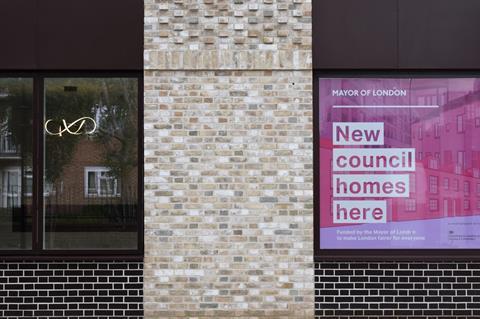
The policy paper and Rayner’s letter to council leaders both say that the government wants to prioritise social rent in later phases of the programme. But compared with the detail devoted to its plans to scale up council building capacity, the government has been less clear about what its plans to “prioritise” social rent actually look like. There was no specific commitment, for instance to increase the rate to 80% or 100% for later funding allocations. After all, one could argue that the current 60% rate is a demonstration of its prioritisation over other subsidised tenures.
If you go back to Burnham’s campaign trail comments, he actually explained to reporters why he used the term council housing - and his answer was telling. “The reason I use that phrase, rather than social homes, is because we’ve kind of gone down a path in this country where we’ve taken everything out of local democratic control,” he said. It seems, then, that the control and accountability aspect of council housing - something which fits neatly into his wider agenda of devolution and democratisation - may be more important to him than the affordability aspect.
Even absent a wholesale shift towards social rent, the council housebuilding plans set out by the government this week would be a generational shift in policy - if they can be achieved. Getting councils anywhere near the current delivery rates of housing associations, let alone the rates achieved by local authorities post war, will take longer than the lifetime of this parliament. For Burnham to be around for this, he would have to last longer than every prime minister since David Cameron.
A council housebuilding revolution? Perhaps. But not today.




No comments yet