



The force expects to hand case over to CPS by the end of September
The seven-year public inquiry into the root causes of the Grenfell Tower tragedy may have slowed down the criminal investigation into the matter but did not damage it, according to the Metropolitan Police’s lead on the case.
At a press conference in New Scotland Yard this morning (Tuesday), the Met told the media that it aimed to make its final submission of files to the Crown Prosecution Service (CPS) by 30 September 2026. In turn, the CPS expects charging decisions to be announced before the 10th anniversary of the fire on 14 June 2027.
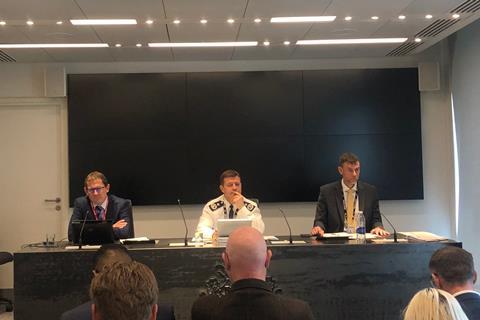
Garry Moncrieff, the Met’s officer in overall command, said the force was issuing the update now so as not to disrupt the ninth anniversary of the fire, which will take place next month and which he said was ”particularly important to the families and the survivors”.
The fire at Grenfell Tower in west London on 14 June 2017 killed 72 people. The subsequent two-phase inquiry into the disaster pointed the finger at decades of government failure, a slapdash construction culture and the dishonesty of building product manufacturers.
Moncrieff said he ”couldn’t begin to understand” what impact the wait for a resolution to the criminal investigation might have had for families and survivors, however he noted that the case was one of the “largest and most complicated investigations ever undertaken by UK law enforcement”, with more than 165 million electronic files gathered and searched for evidence and 14,400 statements taken.
”All of that process has taken a huge amount of time, but it is important that we do it once and we do it right,” he said, adding that the “web of blame” identified by the inquiry had been a “challenge” that had taken time to “decipher and untangle effectively”.
Asked whether the public inquiry had slowed down the criminal investigation, he said: “Honestly, yes I think it has”. However, he said he could ”understand why something like that was necessary, because obviously the safety of people around the UK is paramount” and added that the inquiry had not “damaged” the investigation.
In its investigation, the Met has evaluated the role of 15,000 individuals and 700 organisations relevant to the investigation, with 57 individuals and 20 organisations remaining suspects for criminal offences. One person has so far been arrested and released under investigation.
Potential criminal charges include corporate gross negligence, manslaughter and fraud, as well as misconduct in a public office. Moncrieff said the number of individuals and organisations under suspicion “may still change”.
So far, the Met has submitted 15 advice files to the CPS, with 10 overarching evidence files complete.
Frank Ferguson, chief crown prosecutor at the CPS, said his organisation had a “dedicated team” of lawyers and counsel advising the police on “further lines of inquiry” and the evidential requirements to build a case. The matter will pass fully to the CPS once all lines of inquiry have been examined and all evidence files submitted.
Ferguson said it was “not possible to be definite about timescales” for charges actually being brought by the CPS following the final submission of evidence by the Met, but said he was “confident” of completing the process before the 10th anniversary.
The Met also revealed that as part of its preparations for a criminal case, it was building a mini-replica of Grenfell Tower, at a cost of £2m. The model will not be used for testing or demonstrations of the fire, but will be used to model the tower’s condition before and after its refurbishment.
Its reconstruction has been based on documentary evidence, as well as forensic evidence from more than 14 months of work by the Met at the scene of the fire itself.




No comments yet