
Statutory instrument laid for creation of body, despite mixed result of consultation
The government is pressing ahead with plans for a development corporation for Greater Cambridge, despite its consultation revealing significant opposition from local government and residents.
The Ministry for Housing, Communities and Local Government laid down a statutory instrument to establish the Greater Cambridge Development Corporation (GCDC) yesterday (4 June), following a consultation launched in February.
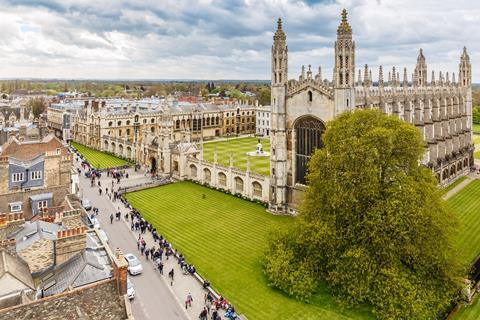
The regeneration body will give the region greater powers to accelerate infrastructure and housing delivery across the Oxford to Cambridge growth corridor, dubbed “Europe’s Silicon Valley”, through land assembly and investment in key sites.
A key focus of the development corporation, which will operate as a joint national and local body, will be to unlock stalled and derelict sites for development.
It will also support the work of the Cambridge Growth Company, a public-private partnership set up by the government as a subsidiary of Homes England in 2024.
The creation of the GCDC will now be subject to parliamentary scrutiny and approval, after which housing secretary Steve Reed will appoint an interim board.
A full board is expected to be appointed by early 2027, following a public appointments process and invitations to local leaders.
A powers and functions statutory instrument will be laid in the autumn, which will give the corporation plan-making and development management powers.
MHCLG’s announcement of the new body came after the conclusion of a consultation, which ran between February and April.
The consultation received 773 responses, of which 617 were individuals, with 91% of respondents saying they lived or worked in Greater Cambridge.
The majority of individuals (68%) and the plurality of local government organisations (48%) and interest groups/voluntary organisations (42%) said they were opposed or mostly opposed to the creation of a centrally-led urban development corporation.
Concerns were raised that a centrally-led body would “reduce local democratic representation and accountability” and that the consultation proposals did not outline safeguards for the natural environment.
However, the vast majority of private sector organisations and professional bodies (81%) were either supportive or conditionally supportive.
Supporters argued that a development corporation would provide long-term strategic vision and resolve complex infrastructure constraints.
In its consultation response, the government emphasised that elected local leaders would be invited to join the GCDC’s board and said it would work with the body to “introduce additional mechanisms to strengthen local participation and representation”.
Specifically, it said it would ask the corporation to “create structured forums for engagement which reflect the diversity of places and lived experiences across the region,” citing the Old Oak and Park Royal Development Corporation Community Review Group as a model.







No comments yet