



CIH welcomes move to accelerate warm homes plan
The government has announced an extra £100m to help social housing providers carry out energy efficiency upgrades to their stock as part of a fresh package of energy measures.
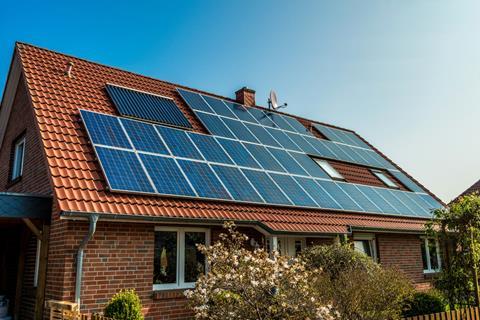
The Department for Energy Security and Net Zero (DESNZ) said the government is providing the extra funding to the Warm Homes: Social Housing Fund, previously known as the Social Housing Decarbonisation fund.
The additional grant be used to support the delivery of up to a total of 57,000 solar installations for households this financial year. The fund has already had £1.29bn confirmed for it between 2025 and 2028 to upgrade around 100,000 homes.
The social housing fund supports social housing providers to insulate social homes, improve energy efficiency and upgrade heating systems. The funding together with match funding from housing associations aims to help retrofit social homes and tackle fuel poverty for residents.
The move was welcomed by Gavin Smart, chief executive of the Chartered Institute of Housing.
He said: “As another international crisis starts to push energy bills even higher, it is right that the government looks to accelerate the Warm Homes Plan.
“Every piece of loft insulation or solar panel that we install helps to keep homes warmer and cheaper to power, while reducing our reliance on volatile fossil fuel markets. CIH and our members will continue to support the government with this work in these crucial months before next winter.”
The government also announced this week it is increasing the boiler upgrade scheme grant – used to help households and businesses install heat pumps in homes – from £7,500 to £9,000 per home for properties heated by oil or liquefied petroleum gas.
It has also earmarked £25m to pilot support for plug-in solar panels.
The government pledged yesterday to “break the link” between volatile gas prices and the price of electricity following concern about the impact of the Iran war on energy costs for households.
It said it will offer voluntary long-term fixed contractors to low-carbon generators and will tax “excess profits” through the electricity generator levy by raising the rate from 45% to 55% in a bid to ensure a greater proportion of revenue generated when gas prices rise is available to government “to support businesses and households with the impacts of the conflict in the Middle East on the cost of living”.
Keir Starmer, prime minister, said: “We need to get off the fossil fuel rollercoaster – this will make energy bills more stable and take the pressure off family budgets. When global gas prices spike, people here shouldn’t be picking up the tab.
“Our focus is simple: easing pressure on household budgets now, while building a homegrown energy system that protects families from global instability in the years ahead.”






No comments yet