



New regulatory approach would ‘ensure more consistency in staff development’ says CIH Scotland director as Scotland’s Housing Festival gets underway in Glasgow
The Chartered Institute of Housing (CIH) Scotland has called on the government to introduce a new professionalism standard to the Scottish Social Housing Charter in a bid to improve leadership.
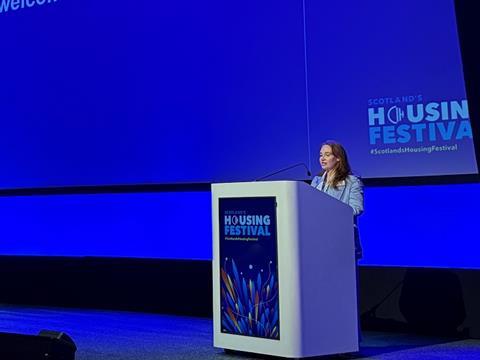
The move follows new research focusing on areas for improvement in culture across the country’s social housing sector. The research, commissioned by CIH Scotland and carried out by Indigo House, was published today as the CIH’s annual Scottish Housing Festival got underway in Glasgow.
The Scottish Social Housing Charter is operational under the Housing (Scotland) Act 2010 and sets the standards and outcomes social landlords should aim to achieve when performing their activities. Social landlords in Scotland are currently regulated by the Scottish Housing Regulator and Audit Scotland, depending on provider type. CIH Scotland said a new charter outcome would create a “consistent, sector-wide approach” to staff development and succession planning.”
Gillian McLees, CIH Scotland national director, said: “We know from the responses to this survey that housing professionals are feeling the pressure of underinvestment, conflicting priorities and being asked to do more with less. Our findings highlight the need for a new regulatory approach to ensure more consistency in staff development and succession planning, so that people are equipped to do their jobs and feel valued.
“Regulating professionalism is not about adding more pressure but strengthening and recognising the vital role that housing professionals play in communities throughout Scotland.”
The report said all the evidence from stakeholders “confirms housing failure in many parts of Scotland” and at the same time “critical challenges to secure and retain the workforce.”
It said the evidence points to scope for improvement in leadership with a greater focus on succession planning needed.
It said: ”Social housing in Scotland is the exception when compared to the other relevant sectors examined; it is the only ‘profession’ which does not have mandatory requirement for a qualification for certified practice and CPD. Furthermore, the structure of the social housing system in Scotland does not support systemic workforce or leadership development due to the disjointed regulatory framework where, in respect of leadership development, half the sector is covered by SHR, and half by Audit Scotland.
“Evidence suggests this aspect of regulation is light touch. This points to the requirement for a mechanism to support systemic leadership development which is consistent for both local authorities and RSLs so the whole sector is covered.”
The membership body added that the new approach would “create regulatory oversight of professional development while allowing flexibility within organisations for it to be tailored to local needs and priorities.” It said it would also improve transparency with tenants and wider stakeholders on the competence and skills of housing professionals.
The research was based on survey responses from 201 housing practitioners and 52 tenants, along with regulators. The survey asked a range of questions about leadership and culture both within respondents’ organisations and the sector as a whole.







No comments yet