



Group says ‘practical ceiling’ to BNG uplift will damage emerging market for credits
A nature charity is threatening to bring a judicial review against the housing ministry over limits to biodiversity net gain requirements introduced in recent planning reforms.
The government’s latest National Planning Policy Framework (NPPF), published last month, restricts the ability of local planning authorities to adopt biodiversity net gain (BNG) requirements higher than the statutory minimum of 10%.
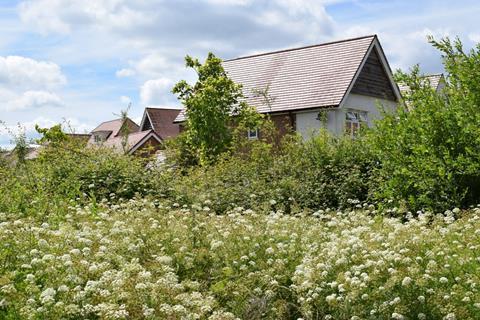
The BNG regime, which requires developers to leave the natural environment across their sites in a measurably better state than they found it, was introduced by the Environment Act 2021 and has been celebrated by environmental advocates but caused consternation among housing developers.
Last week, the Lifescape Project delivered a pre-action protocol letter to the housing secretary, Angela Rayner, raising concerns about the legality of the policy shift.
The charity, which is focused on the restoration of wild landscapes, is concerned that the revised NPPF turns the statutory minimum into a “practical ceiling” and “seems to run counter” to prime minister Andy Burnham’s devolution agenda.
“There are also important legal questions arising from the use of centralised policy to downgrade statutory provisions,” it said.
Lifescape argues that the policies, read alongside other recent BNG exemptions, could have a significant negative impact on the market for BNG credits, which is in its early stages and is “dependent on its statutory underpinning for investment stability”.
Lifescape has since 2024 been a designated responsible body for conservation covenants under Part 7 of the Environment Act 2021, with a direct interest in nature markets.
This means it has government approval to sign legal contracts with landowners to protect nature, allowing them to trade and manage environmental credits.
Lifescape’s pre-action protocol letter alleges that the government’s planning reform “unlawfully frustrates the effective operation of various statutes” and “unlawfully attempts to amend the statutory framework via planning policy”, among several other legal claims.
The government has 14 days from the letter’s issuance (15 September) to respond, after which Lifescape said it would consider a full judicial review.
Commenting on the legal action letter, Matt Williams, founder and developer at ‘abitat’, a BNG market intelligence platform, said the new market for BNG credits is “a world-first and a rare and precious opportunity to use private capital to drive real change in our environment”.
“New markets need time to settle into a balance, where supply and demand thrive on certainty and abundance,” he said.
“The BNG market as a whole is currently suffering from a lack of transparent, consistent demand. Aside from the clear issues around local determinism, a blanket reduction of that demand by removing the ability of an LPA to decide its own standards will affect the entire market in wholly negative ways.”
Some local authorities have already adopted policies requiring BNG above 10% and Lifescape said the new planning policy could negatively impact their ability to meet their nature recovery targets locally.
Ian Thorn, leader of Wiltshire Country Council, said his authority was “keen to bring in ambitious BNG delivery plans as part of our Local Plan because we want to provide communities with even more access to high-quality nature”.
“Since becoming PM, Andy Burnham has written to say that devolving power to local areas is a priority,” he said.
“However, this planning policy change suggests that the Government wants to weaken our commitment to BNG through centralised directives.”
Lifescape is being advised by lawyers at Cornerstone Chambers.
The Ministry of Housing, Communities and Local Government has been contacted for comment.




No comments yet