



Analysis commissioned by government fuels calls from housebuilders for fresh demand-side intervention to boost market
The Help to Buy scheme delivered “very high value for money” for taxpayers and provided a boost to housing supply that went beyond the homes sold through the scheme, an official analysis of the policy has concluded.
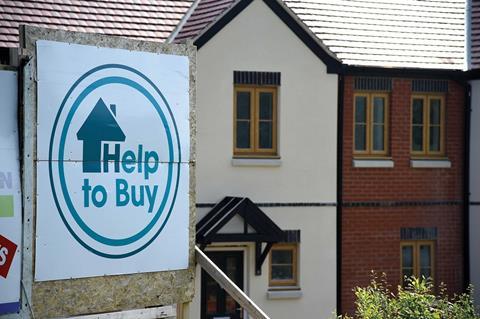
The Ministry of Housing, Communities, and Local Government (MHCLG) yesterday published the results of an independent evaluation of the scheme carried out by research firms Verian and Alma Economics and Sheffield Hallam University.
The report found that Help to Buy, which provided an equity loan worth up to 20% of the property value (later increased to 40% in London) to enable recipients to purchase a property, “had an overall positive impact on housing supply across England.”
It said that around 15% of new builds between 2013 and 2023 were as a result of Help to Buy and Help to Buy 2, a later iteration which applied regional-level price caps and restricted access to first-time buyers.
The analysis looked at homes built close to the England/Wales border. It found the number of new homes started on the English side increased much faster than on the Welsh side following the start of the scheme in England.
It said: “The scale of this effect indicates there was some spillover from the scheme. In other words, this evidence suggests that Help to Buy led to an increase in housing supply beyond the homes bought through the scheme.
“The evidence for such spillover is supported by the views of developers, who reported building more homes due to increased confidence, in turn increasing their build pace and number of sites.”
It also found the Help to Buy scheme, “contributed to increased confidence among developers” which led to a “widespread recovery in the number of new developments being completed over the first years of the scheme”.
The analysis also found the value for money for the public money spent on the scheme was “very high”, due to financial returns generated and the social benefits derived from an increase in housing supply.
It said: “The scheme is estimated to have generated a net present social value of £25.1 billion. Approximately £28.6 billion of benefits are derived from the support the scheme provided to increase new housing supply that is estimated to be attributable to the Help to Buy scheme.”
The scheme cost £3.6 billion in present value terms.
The report however said that while Help to Buy was successful in supporting people into home ownership in some areas in England, it was “not as effective at removing affordability barriers for first-time buyers in areas that were already relatively expensive.”
The findings are likely to re-ignite calls from across the housebuilding sector for demand-side measures to boost the ailing market.
Responding to the report, a spokesperson for the Home Builders Federation, said: “This independent evaluation underlines the significant and widespread benefits Help to Buy delivered, supporting homebuyers onto the housing ladder, stimulating housing supply and growth and delivering a return for tax payers.
“Its withdrawal by the previous government in 2022 brought to an end more than 60 years of home ownership support for homebuyers. Constrained viability and suppressed effective demand has led to an ongoing housing supply slump. If government wants to reverse the decline in housebuilding and drive much-needed economic growth, a new home ownership intervention needs to be considered as a matter of urgency and the report provides valuable lessons to support that.”







No comments yet