



MHCLG ‘left more funding back’ to be allocated to councils later on after new PM refreshed priorities
The first wave of allocations from the government’s flagship affordable housebuilding programme were reduced after Andy Burnham became prime minister in order to give councils time to build capacity, remarks by the housing minister appear to suggest.
Last month, the government announced the first £10bn worth of allocations from its £39bn Social and Affordable Housing Programme (SAHP).
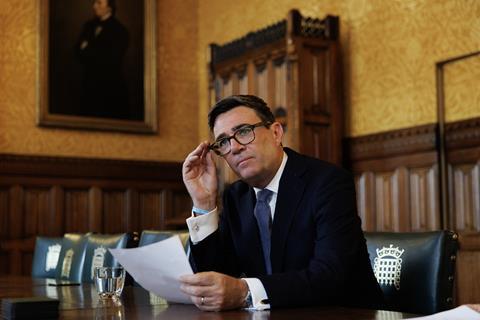
Much of this grant funding was directed to housing associations and to subsidised tenures other than social rent, a move widely described as a u-turn by the new prime minister, given his vocal support for council housebuilding and social rent.
However, comments from Matthew Pennycook to a House of Lords committee last week gave the clearest picture yet of how August’s allocations had been affected by the new prime minister.
Pennycook said the ministry had “slightly altered” the announcement on the back of Burnham’s “refresh priorities”, as a result of which it had “left more of the funding back” to give to councils later on.
On the campaign trail to become Makerfield MP, a crucial step in his ascent to Number 10, Burnham had promised a “council housebuilding revolution” and indicated a preference for the Labour government’s £39bn Social and Affordable Homes Programme to be redirected entirely towards council housebuilding.
Council housing refers to homes built and owned directly by councils, as opposed to non-profit housing associations.
However, colloquially it is often used to refer specifically to homes under council ownership which are let at social rent - generally the lowest cost tenure for tenants - as opposed other forms of subsidised housing such as shared ownership or affordable rent.
Starmer’s administration, which launched the SAHP, had committed that 60% of the homes delivered through it would be social rent, but did not make specific commitments about direct delivery by councils.
After Burnham entered No 10, there had been concerns in the housing sector that the new PM would reset the programme entirely to focus it on council housing, which would likely have resulted in a re-run bidding process, causing delays in affordable housing delivery.
These fears were compounded when the allocations were not announced as expected at the end of July, but ultimately proved unfounded in August when the Ministry for Housing, Communities and Local Government (MHCLG) announced £10bn worth of allocations for parts of England outside London.
The vast majority of the 33 strategic partners chosen were housing associations, with only three councils selected - all of which were at the very bottom of the list in terms of expected delivery numbers.
However, the allocations were accompanied by the announcement of £46m in funding to increase building and bidding capacity within local authorities, as well as a letter from housing secretary Angela Rayner to council leaders telling them she expected “every council to scale up now.”
In his comments to the Lords built environment committee, Rayner’s deputy, Matthew Pennycook, appeared to suggest that the new prime minister’s impact on housebuilding policy had gone further than this support for capacity building, explaining that money had been held back in the initial allocations to give to councils later.
“We have slightly altered some of the announcements that we’ve made in recent weeks as a result of the new prime minister’s refresh priorities,” said Pennycook.
“A really good example is the Social and Affordable Homes Programme. We announced just last week the first wave of funding out of that program. We have left more of the funding back to be allocated to councils to do direct delivery of council house building.
“I think that’s a sort of example of how we have pragmatically adapted the programmes to ensure that we keep pace, keep delivery going, but slightly tweak them to reflect the new prime minister’s priorities.”
Back in June, before Burnham became prime minister, Homes England had already written to social housing providers asking them to push back some of their expected timelines for grant payments due to the Treasury limiting how much money can be spent in the early stages of the programme.
At the time, the National Housing Federation estimated that 17,000 fewer affordable homes could be built over the next three years as a result of that re-profiling. It’s unclear what impact the changes implemented after Burnham took office have had on this.
When asked for comment, the MHCLG did not dispute Housing Today’s interpretation of Pennycook’s remarks.
A spokesperson for the ministry said: “Last week we announced the first wave of our record £39 billion to Strategic Partners, every penny of which will be used to end the housing crisis and deliver the homes we need.
“We’ve been clear future funding rounds will prioritise social rent homes and council housebuilding.”




No comments yet