



But housing secretary yet to make decisions on shake-up in two of six areas
The Chartered Institute of Housing has welcomed the “clarity” provided by the housing secretary’s announcement on local government reorganisation yesterday.
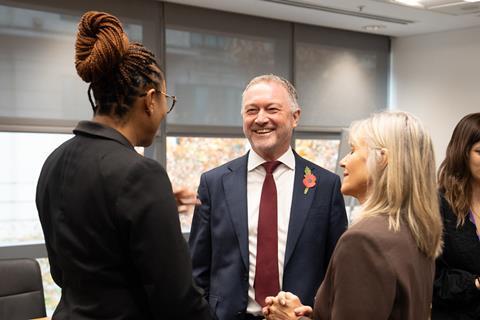
In a statement to the House of Commons, Steve Reed announced that he had made his decisions on the reorganisation of councils across a large part of south and east England.
His plans will see 15 new unitary authorities replace 43 existing counties and districts across four broad areas.
After an invitation from the government last year, a total of six areas - East Sussex and Brighton and Hove; Essex, Southend-on-Sea and Thurrock; Hampshire, Isle of Wight, Portsmouth and Southampton; Norfolk; Suffolk; and West Sussex - had submitted 17 proposals for reorganisation and unitarisation.
All of these were taken to consultation, which closed on 11 January 2026, after which Reed considered which proposals should be implemented.
In two areas, East Sussex and Brighton and Hove as well as West Sussex, Reed said he had yet to make a decision on the four proposals put to him, but said that he would do so “as soon as practicable”.
He said he was “still fully committed to delivering reorganisation in these areas with elections in May 2027 and changes coming into effect from April 2028”.
However, in the other four areas, Reed set out plans for a total of 16 unitary authorities, all but one of which are newly formed.
Only the Isle of Wight Council, will remain in its current form.
In his statement to the Commons, Reed said the government’s reorganisation of local government was a “once-in-a-generation chance to make sure our councils match the modern realities of our places, making sure outdated boundaries are not constraining growth, particularly in our towns and cities”.
He said that ensuring boundaries reflected local needs was “particularly important for key government priorities on housebuilding”.
Tom Arnold, policy manager for regional engagement and devolution at CIH, said:
“Housing professionals in Essex, Hampshire, Norfolk and Suffolk will welcome the clarity that today’s announcement on the new local authority geographies provides.
“Local government reorganisation has significant implications for housing, with work now required to ensure local authority owned homes are transferred to the new councils as smoothly as possible.
“We encourage government to provide as much guidance as possible for local authorities going through this process, and to learn from the experiences of areas that have already undergone unitarisation over recent years.
“The government is rightly pushing to build more new homes and has made several positive changes to the planning system to support this objective. Local authorities undergoing reorganisation will need support to ensure planning, regeneration and housing delivery activity can continue at pace.”
The full details of the four-area reorganisation
Essex, Southend-on-Sea and Thurrock:
- West Essex Council (current local government areas of Epping Forest, Harlow and Uttlesford)
- North East Essex Council (current local government areas of Braintree, Colchester and Tendring)
- Mid Essex Council (current local government areas of Brentwood, Chelmsford and Maldon)
- South West Essex Council (current local government areas of Basildon and Thurrock)
- South East Essex Council (current local government areas of Castle Point, Rochford and Southend-on-Sea).
Hampshire, Isle of Wight, Portsmouth and Southampton:
- North Hampshire Council (current local government areas of Basingstoke and Deane, Hart and Rushmoor)
- Mid Hampshire Council (current local government areas of East Hampshire, New Forest, Test Valley and Winchester, less 11 parishes from all 4 areas)
- South East Hampshire Council (current local government areas from East Hampshire, Fareham, Gosport, Havant, Portsmouth, 3 parishes from East Hampshire and 1 parish from Winchester)
- South West Hampshire Council (current local government areas of Eastleigh, 4 parishes from New Forest, Southampton and 3 parishes from Test Valley)
- Isle of Wight Council will remain as a separate unitary authority.
Norfolk:
- West Norfolk Council (current local government areas of Breckland, King’s Lynn and West Norfolk, and 9 parishes from South Norfolk).
- Greater Norwich Council (current local government areas of Norwich, 19 parishes from Broadland, and 16 parishes from South Norfolk).
- East Norfolk Council (current local government areas of Broadland (less 19 parishes), Great Yarmouth, North Norfolk, and South Norfolk (less 25 parishes)).
Suffolk:
- Central and Eastern Suffolk Council (current local government areas of West Suffolk, 21 parishes from Mid Suffolk, and Babergh (less 31 parishes)).
- Western Suffolk Council (current local government areas of Mid Suffolk (less 29 parishes), and East Suffolk (less 25 parishes).
- Ipswich and South Suffolk Council (current local government areas of Ipswich, 31 parishes from Babergh, 8 parishes from Mid Suffolk, and 25 parishes from East Suffolk).


No comments yet