


Common Wealth urges measures to strengthen corporate accountability in the UK
Arconic paid tens of millions more in its legal settlement with its shareholders than it paid to the estates of victims or survivors of the Grenfell Tower fire, according to a new report.
The June 2017 fire killed 72 people after spreading uncontrollably through the external cladding system of a residential tower in West London.
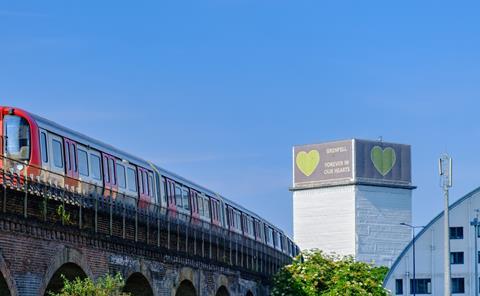
The cladding system comprised combustible cladding products made by three companies - Arconic, Kingspan and Celotex.
The first phase of a subsequent inquiry into the fire found Arconic’s product, Reynobond PE, to be the “primary cause” of the fire’s rapid spread, while the second phase report found that product manufacturers had intentionally manipulated and misrepresented fire safety tests in order to mislead the market over combustible materials.
A new report by Common Wealth, a left-leaning think tank, and FIND.ngo found that Arconic completed two settlements related to the fire in 2023.
A settlement with its shareholders, relating to alleged economic loss arising from misleading statements in connection with the safety of Reynobond PE, was valued at $74m (£55m), according to the research.
Addressing the shareholder settlement in a 2023 filing to the US Security and Exchanges Commission, Arconic said it was made “without admission of fault or wrongdoing by the defendants”.
Meanwhile, a civil settlement with the victims and survivors of the fire was found to be worth $43m (£32m).
An Arconic statement at the time said it continued “to express its deepest sympathy to the Grenfell residents and their families, and appreciates the importance of this milestone for providing a resolution that lessens the delay and stress to claimants that would result from protracted legal proceedings”.
According to the research, all but $2m (£1.5m) of Arconic’s payments were covered by its insurers.
The research argued that Arconic has “successfully avoided consequential accountability for its role in the fire, through a series of ordinary business practices” and urged changes to the law to increase corporate accountability.
Common Wealth made eight recommendations for measures to improve corporate accountability generally, as well as addressing Arconic specifically, with the latter including a permanent debarment of the firm from public contracts.
It suggested that this should be reconsidered only once the firm makes public information regarding its sales of the Reynobond product.
Arconic has been contacted for comment.
Full list of Common Wealth’s recommendations:
- Courts should have discretion to direct a portion of shareholder settlement recoveries to victim funds where the underlying conduct involved identifiable third-party harm.
- Punitive damages should be available in England and Wales in cases where corporate illegality is implicated in a death or deaths and should cover reckless and negligent conduct as well as gross negligence and gross breaches.
- It should be mandatory for corporate liability insurers to conduct human rights and environmental due diligence.
- Accountability mechanisms must be introduced to ensure that insurers do not cause, contribute, or are linked to entities involved in human rights violations.
- Arconic should make public information regarding the remaining 99% of Reynobond sales for 2014-2015, and sales of Reynobond for preceding years.
- Increase the five-year ceiling on debarment from public contracts under the 2023 Procurement Act.
- Permanent debarment of Arconic from public contracts, to be reconsidered at publication of sales.
- A comprehensive review of criminal sanctions that apply to corporate malpractice in England and Wales.




No comments yet